
Reviews
Crate Placement Logic offers a pure, uncluttered puzzle experience. The core mechanic of pushing crates onto targets is simple to learn but provides deep strategic challenges. The level design is excellent, with a smooth difficulty curve that keeps you engaged without frustration. The lack of timers or scores makes it a relaxing activity. Controls are responsive on both keyboard and touch devices. It is an ideal game for anyone who enjoys logic puzzles and wants a calm, brain-teasing pastime.
About this game
Core Puzzle Mechanics
At its heart, Crate Placement Logic is a spatial reasoning challenge. You control a character on a two-dimensional board made of squares. Scattered around are crates, and your objective is to move each one onto a designated target square. The twist is that you can only push crates away from you, never pull them toward you. This simple rule forces you to think several steps ahead. A single wrong push can trap a crate against a wall or in a corner, making the level unsolvable. This design encourages methodical thinking and rewards patience.
Level Design Philosophy
The game presents a series of puzzles that increase in difficulty. Early levels feature open spaces with few crates, allowing you to learn the basic movement and pushing mechanics. As you progress, boards become more cramped, with walls and other crates creating obstacles. The layouts are carefully crafted so that each puzzle has a single correct solution path. This means there is no randomness or luck involved; success comes from logical deduction. The gradual difficulty curve ensures that players of all skill levels can find an appropriate challenge.
Controls and Accessibility
Controls are straightforward and responsive. On a computer, you use the arrow keys or WASD to move the character in four directions. For touchscreen devices, on-screen directional buttons appear, allowing you to tap the direction you wish to move. There is no time limit, so you can pause and think at any point. The interface is clean, with a minimal number of on-screen elements, reducing distractions. This focus on simplicity makes the game accessible to younger players and those new to puzzle games.
Visual and Audio Presentation
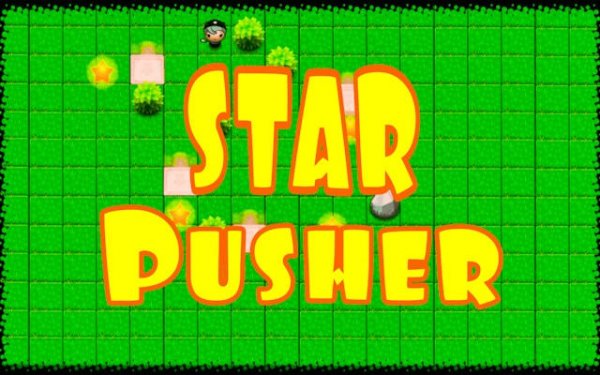
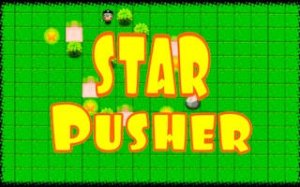
The visual style is clean and uncluttered. Boards use a simple tile-based design with distinct colors for floors, walls, crates, and targets. The character is a small, friendly figure that moves smoothly across the grid. There is no background music, but subtle sound effects provide feedback for moving, pushing, and completing a level. This minimalist approach helps maintain concentration on the puzzle itself. The overall aesthetic is calm and inviting, suitable for a family audience.
Progression and Replay Value
Each completed level unlocks the next, providing a clear sense of progression. The game does not track scores or time, so the only measure of success is solving the puzzle. This removes any pressure and allows for a relaxed experience. Because each puzzle has a unique layout, replaying a level after solving it can be done to refine your approach, but the primary value comes from the initial challenge. The game is ideal for short play sessions, such as during a break, or for longer periods of focused problem-solving.





Comments
Sign in to leave a review
No account? Create one
No comments yet.