
Reviews
Charge Alignment Logic Challenge stands out for its simple yet deep core mechanic. Flipping object charges to create attraction or repulsion leads to satisfying moments of discovery. The gradual difficulty curve ensures that players never feel lost or bored. Visual clarity and a calm pace make it ideal for relaxing mental exercise. It is a well-crafted puzzle experience that respects the player's intelligence.
About this game
Core Interaction Model
Players click or tap on objects to flip their charge between positive and negative states. This action causes objects to attract or repel one another based on their current charge. The challenge lies in predicting how these forces will move each item through the environment to reach a designated endpoint. Since every object responds to nearby charges, a single change can set off a chain reaction that either solves the puzzle or creates a new obstacle.
Level Structure and Difficulty Curve
The game presents a sequence of stages that gradually introduce more complex arrangements. Early puzzles involve only two or three objects and simple paths. Later stages add multiple items, moving platforms, and obstacles that block or redirect movement. This steady increase in complexity ensures that players build a solid understanding of the charge mechanics before facing tougher challenges. Each stage can be completed in a few minutes, making the game suitable for short play sessions.
Visual and Interface Design
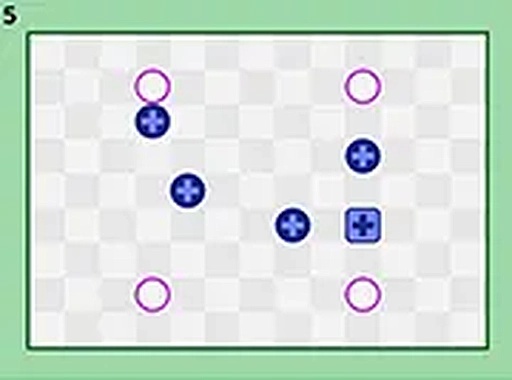
The screen shows a clean, uncluttered workspace where each object appears as a distinct shape with a clear indicator of its current charge. A simple color scheme helps players instantly see which objects are positive and which are negative. On-screen hints are available for those who need a nudge, but the interface never overwhelms with unnecessary information. This minimalist approach lets players focus entirely on the logic of each puzzle.
Strategic Thinking and Experimentation
Success often requires trying different charge combinations to see how objects respond. Some puzzles have a single correct sequence of toggles, while others allow multiple approaches. Players learn to anticipate how objects will move after each change and to plan several steps ahead. The game rewards patience and creative thinking, as the most obvious solution may not always work. Regular practice helps improve both speed and accuracy in solving these spatial challenges.



Comments
Sign in to leave a review
No account? Create one
No comments yet.